

Pediatric Feeding Program
A multidisciplinary program for children, teens, and families navigating feeding challenges
The case for a multidisciplinary approach
Feeding challenges are often misunderstood as “picky eating,” defiance, or a parenting problem. In reality, pediatric feeding concerns may reflect a complex interaction of anxiety, sensory processing, oral-motor skills, swallowing safety, medical history, developmental profile, family stress, learned aversion, nutrition, and previous negative experiences with food.
That is why our feeding program is intentionally multidisciplinary. A child may need help reducing fear around eating. Another may need support tolerating smells, textures, temperatures, or mixed consistencies. Another may struggle with chewing, pacing, interoception, or mealtime endurance. Many children need more than one lens.
At Talbot Psychology Alliance, we do not begin with pressure. We begin with understanding.

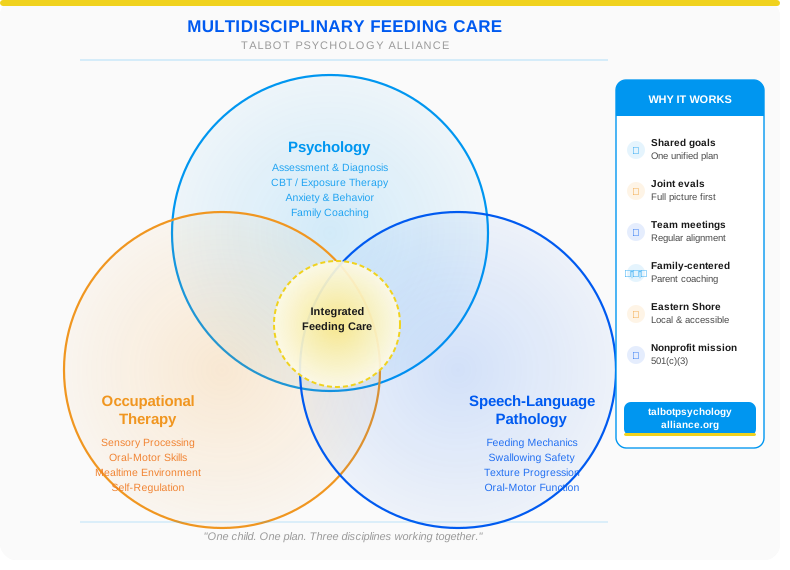
What roles do Psychology, Occupation Therapy and Speech-Language Pathology play in feeding therapy?
Psychology
The role of Psychology in Feeding Therapy
Psychology examines the emotional, behavioral, developmental, and family-system factors that may maintain feeding difficulties. These may include anxiety, avoidance, rigidity, traumatic feeding experiences, parent-child interaction patterns, distress tolerance, neurodevelopmental factors, and ARFID-related concerns.
Psychological care may include assessment, parent guidance, psychoeducation, exposure-based treatment planning, cognitive-behavioral strategies, anxiety reduction, and support to build mealtime confidence.

Occupational Therapy
The role of OT in Feeding Therapy
Occupational therapy brings attention to sensory processing, self-regulation, posture, routines, independence, and the child’s ability to participate in everyday meals. OTs help determine how sensory sensitivities, arousal level, motor planning, body awareness, environment, and daily routines may affect feeding.
OT-informed intervention may support sensory exploration, regulation before and during meals, tolerance for new foods, adaptive mealtime routines, and practical strategies that fit the family’s home and school life.

Speech-Language Pathology
The role of SLP in Feeding Therapy
Speech-language pathologists bring expertise in pediatric feeding and swallowing, oral-motor function, chewing, bolus control, pacing, safety, communication, and mealtime participation. SLP involvement is especially important when there are concerns about swallowing, gagging, coughing, texture progression, oral-motor coordination, or feeding skill development.
When needed, SLPs help determine whether feeding challenges involve skill-based or swallowing-related concerns and whether additional medical or instrumental evaluation is appropriate.

Why Feeding Therapy Matters
Food is at the center of what unites families, friends, communities, and cultures. Furthermore, nutrition plays a crucial role in enhancing mental health and promoting overall well-being. Sharing a meal with others can break down barriers to communication and foster a sense of belonging. When feeding becomes stressful, limited, painful, frightening, or conflict-filled, the impact can reach far beyond the plate.
Children who struggle with feeding difficulties often miss opportunities for social and emotional growth, as eating with others presents challenges. “What if my preferred food is not available?” “Will I be pressured to eat something that could cause me to vomit?” “Why can’t people just let me eat what I like?” “Will someone notice or comment on my feeding tube?” “Why do I struggle with something so basic?” Children with feeding problems often feel misunderstood, and their parents frequently feel judged or blamed for their child’s difficulties.
The good news is that those who experience this issue are not alone. An increasing number of diverse professionals have come together to collaborate and support youth facing these challenges, and the multidisciplinary approach is effective in fostering progress and hope.
Talbot Psychology Alliance provides a highly coordinated pediatric feeding program for children and adolescents with feeding problems, including Avoidant/Restrictive Food Intake Disorder (ARFID), severe food selectivity, sensory-based feeding challenges, mealtime anxiety, fear of choking or vomiting, limited food variety, and feeding difficulties that affect family life, school participation, nutrition, confidence, and social development.
Our program brings together perspectives from psychology, occupational therapy, and speech-language pathology so families receive a fuller understanding of what is driving the feeding difficulty and a practical path forward.
Who Can Benefit from Feeding Therapy?
Feeding Therapy may help Children and adolescents who experience:
- Avoidant/Restrictive Food Intake Disorder (ARFID)
- Significant food selectivity or a very narrow range of accepted foods
- Strong reactions to texture, smell, temperature, appearance, brand, or presentation
- Fear of choking, vomiting, gagging, allergic reaction, or feeling sick
- Anxiety, distress, shutdown, conflict, or avoidance around meals
- Difficulty progressing to age-expected textures or mealtime routines
- Low appetite, limited intake, or inconsistent eating patterns
- Mealtime dependence, grazing, or difficulty with structure
- Food refusal connected with autism, ADHD, anxiety, trauma, medical experiences, or developmental differences
- Family stress, school challenges, social avoidance, or reduced participation because of feeding concerns
Evaluation
Treatment
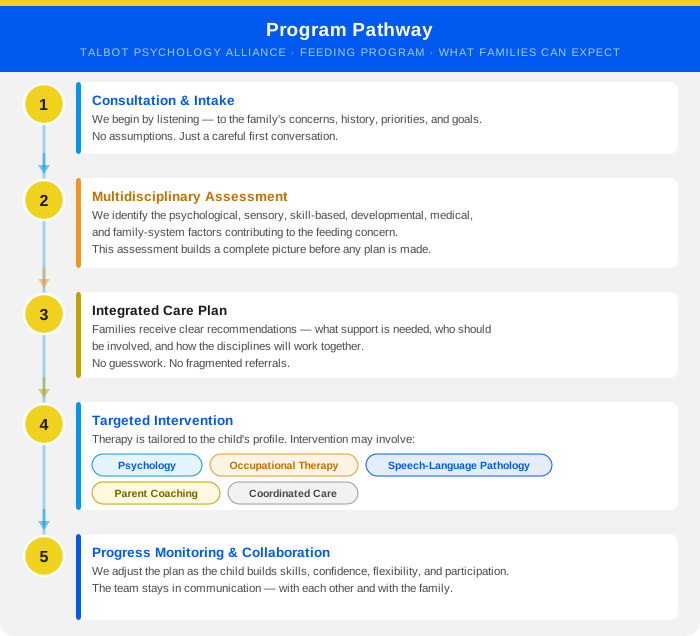
Our assessment process is designed to identify not only what a child eats, but why eating has become difficult.
A comprehensive evaluation that looks at the whole child
Depending on the child’s needs, evaluation may include:
- Clinical interview with caregivers
- Review of developmental, medical, feeding, and psychosocial history
- ARFID-informed screening and psychological assessment when appropriate
- Review of food variety, volume, mealtime routines, and avoided foods
- Observation of feeding patterns, sensory responses, and mealtime behavior
- Consideration of oral-motor, swallowing, texture, and feeding-skill concerns
- Parent and family stressors related to meals
- Coordination with pediatricians, dietitians, schools, or specialty providers when indicated
The goal is a clear, integrated formulation: what is contributing to the feeding problem, what should be prioritized first, and what type of care will be most useful.
Feeding therapy should not be built on pressure, shame, or power struggles. Our approach emphasizes safety, trust, skill-building, confidence, and gradual progress.
Treatment that is structured, compassionate, and practical
Treatment may include:
- Individualized feeding therapy
- Parent coaching and family-based support
- Exposure-based work to expand comfort and flexibility
- Cognitive-behavioral strategies for anxiety and avoidance
- Sensory-informed food exploration
- Support for texture tolerance, oral-motor skills, and mealtime pacing
- Home practice plans that are realistic and measurable
- School or community meal planning when needed
- Collaboration with medical and nutrition providers
We help families move from daily mealtime survival toward a more organized, confident, and connected feeding experience.

Ongoing Support
Long-term progress requires continuous support and collaboration. We provide ongoing therapy sessions, meal planning guidance, and parent coaching to ensure lasting improvements. Our practice also works closely with dietitians, pediatricians, speech-language pathologists, occupational therapists, and other healthcare professionals to ensure a comprehensive and holistic approach to care.
For parents, pediatricians, schools, and community providers
Feeding problems can affect health, learning, social development, emotional wellbeing, and family functioning. Early, thoughtful support can reduce distress and help families understand what is happening before patterns become more entrenched.
We welcome referrals from families, pediatricians, therapists, schools, dietitians, and community providers. Our team can help clarify whether the child’s needs are primarily psychological, sensory, oral-motor, swallowing-related, behavioral, developmental, or a combination.